


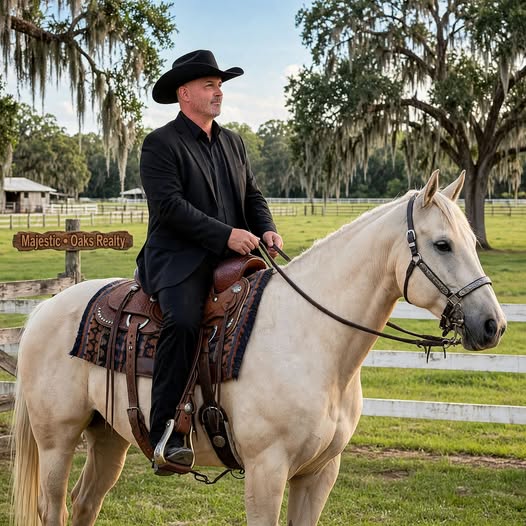
In Ocala, Florida, the Horse Capital of the World, sometimes the best way to understand a horse farm is from the saddle.
Over my years working with equestrian real estate in Marion County, I have had the opportunity to view properties on horseback. It is not simply about enjoying a ride. It is about experiencing firsthand whether the land is suitable for keeping horses, riding comfortably, and developing the facilities that owners envision.
Seeing an Equestrian Property from the Saddle
I have personally explored horse properties on horseback to understand how the land actually works for horses and their owners. From the saddle, I can experience changes in terrain, the flow between pastures, the practical riding space, and the relationship between existing improvements and future possibilities. A conventional tour remains important, but riding the land can reveal a different perspective.
Pasture Suitability and Horse Welfare
An attractive green pasture is not necessarily an ideal horse pasture. I consider usable grazing areas, shade, water access, fencing, gates, drainage patterns and opportunities for rotational grazing. Riding through the property can help reveal uneven ground, awkward connections between fields and places that warrant closer investigation. A qualified pasture, soil or drainage assessment may still be needed.
Rideability: More Than Just Acreage
One of my key questions is whether the property is enjoyable and practical to ride. I consider footing, terrain, available riding loops, natural obstacles, potential schooling areas and access between paddocks. A larger parcel may offer less usable riding space than expected, while a carefully laid-out smaller farm can work exceptionally well. Any off-property trail access must be independently confirmed.
Planning Barns, Paddocks and Auxiliary Housing
I also evaluate where barns, paddocks, riding arenas, trailer access, equipment storage and possible auxiliary housing might fit. The goal is a sensible layout that preserves pasture and makes everyday horse care easier. The feasibility of any new structure depends on zoning, setbacks, access, utilities, permitting, environmental conditions and applicable deed restrictions; it must be verified before a buyer relies on it.
Usable Acreage and Long-Term Potential
Acreage alone does not tell the full story. Wetlands, wooded areas, easements, drainage features and existing buildings can reduce the land available for equestrian use. I encourage buyers to assess the practical function of every part of a property, while respecting Marion County's natural and agricultural character.
Why Equestrian Experience Matters
As a horse owner and real estate broker, I understand that a farm must serve both the people and the horses who live there. My horseback property evaluations are one example of the practical perspective I bring to equestrian real estate. When conditions and permissions allow, riding a property can complement a traditional showing, but it never replaces surveys, inspections or professional due diligence.
Explore Ocala Horse Farms with Majestic Oaks Realty
Whether you are looking for a private horse farm, a luxury equestrian estate or land for a future facility, I welcome the opportunity to help you evaluate the property beyond its listing photographs.
Explore our Ocala horse farms and Ocala luxury homes, or contact Majestic Oaks Realty to discuss your goals.
Marco Mariti
Licensed Real Estate Broker
Majestic Oaks Realty